



Project and Change Management (L5M8)

Module Purpose

On completion of this module, learners will be able to assess the impact and implications of projects, examine approaches applied to the planning and management of projects and recognise the challenges associated with and methods to manage, achieve and maintain organisational change.

Module aim(s)

The speed of development and the drive for maintaining organisational competitiveness mean that change is inevitable in the modern workplace. Consequently, those who work and manage in organisations will be expected to deal with change initiatives and to manage those projects which are generated as a direct consequence. This module is designed for those who are involved in the procurement and supply function, who must recognise the wider environment in which they work and be prepared to apply the tools and techniques that will ultimately lead to the successful management of projects and change initiatives.

Next steps

Starting a CIPS qualification programme means you will join the largest institute in the world for those working in procurement and supply. You can join as a student member online today. Once joined you can book your examinations online

Key Module Details

Icon showing the letters CR, with CONSTRUCTED RESPONSE EXAM written below the green-bordered circle.

Icon showing the letters OR, with OBJECTIVE RESPONSE EXAM written below the green-bordered circle.

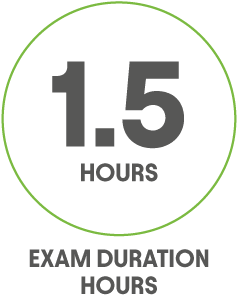
 Icon showing the number 1.5 and the word HOURS, with EXAM DURATION HOURS written below the green-bordered circle.

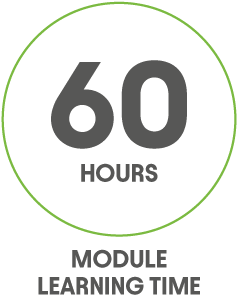
Icon showing the number 60 and the word HOURS, with MODULE LEARNING TIME written below the green-bordered circle.

Icon showing the number 6 and the word CREDITS inside a green-bordered circle.

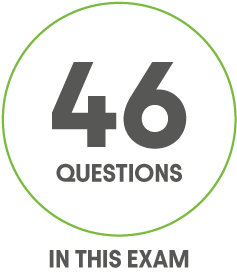
Icon showing the number 46 and the word QUESTIONS, with IN THIS EXAM written below the green-bordered circle.

DOWNLOAD FULL SYLLABUS

Learning outcomes, assessment criteria and indicative content

1.1 Analyse aspects of projects in organisations

  • 1.1.1The relationship between programmes and projects
  • 1.1.2Stakeholder identification, analysis, and involvement
  • 1.1.3Measures of safety, quality, cost and delivery
  • 1.1.4Success and failure of projects
  • 1.1.5Elements of projects
  • 1.1.6Work breakdown structure

1.2 Evaluate the impact on supply chain relationships of undertaking projects

  • 1.2.1Supply chain networks for projects
  • 1.2.2Relationships with sub-contractors
  • 1.2.3Consortiums and joint ventures for projects
  • 1.2.4Traditional and contemporary relationships
  • 1.2.5Project partnering and strategic partnering

1.3 Analyse the resources for projects

  • 1.3.1Resource loading and levelling
  • 1.3.2Multi project scheduling and resource allocation
  • 1.3.3Information technology systems for project management
  • 1.3.4Leading and managing projects
  • 1.3.5Critical chain methodology
  • 1.3.6Asset finance and the role of banks

1.4 Analyse the project life cycles of projects

  • 1.4.1Perspectives on project life cycles
  • 1.4.2Project initiation
  • 1.4.3Organising projects and project implementation
  • 1.4.4Co-ordination in project management
  • 1.4.5Project control
  • 1.4.6Project closure
  • 1.4.7Project review

2.1 Analyse the types of organisational change

  • 2.1.1Evolution
  • 2.1.2Adaption
  • 2.1.3Revolution
  • 2.1.4Reconstruction
  • 2.1.5Closed, contained and open-ended change

2.2 Analyse situations that lead to organisational change

  • 2.2.1Organisational life cycle
  • 2.2.2SWOT and PEST analysis and factors
  • 2.2.3Internal drivers
  • 2.2.4Future trends and innovation
  • 2.2.5Multiple-cause diagrams and simultaneous change
  • 2.2.6Changes in management and structure
  • 2.2.7Cycle of competitive behaviour and reactive breakpoints

2.3 Evaluate organisational responses to change

  • 2.3.1Environmental turbulence
  • 2.3.2Resistance to change
  • 2.3.3Cynicism and scepticism
  • 2.3.4The challenge of maintaining change
  • 2.3.5The change cycle – loss, doubt, discomfort, discovery, understanding, integration

2.4 Analyse methods to manage, achieve and maintain change

  • 2.4.1Collaborate, communicate, direct, and coerce
  • 2.4.2Clarify goals
  • 2.4.3Refine methods and procedures
  • 2.4.4Empowerment and ownership
  • 2.4.5Incremental adjustment
  • 2.4.6Lean and value stream mapping
  • 2.4.7Monitor and maintain changes
  • 2.4.8The change spectrum – hard (difficult) vs. soft (messy) problems

3.1 Evaluate structures for corporate governance

  • 3.1.1Project boards/executive
  • 3.1.2Project responsibility charting
  • 3.1.3The use of project initiation documents
  • 3.1.4Structures of project management such as project, functional and matrix
  • 3.1.5Project reporting

3.2 Analyse the common objectives for projects

  • 3.2.1Identifying goals and objectives of projects
  • 3.2.2The balance between cost, quality, and time in projects
  • 3.2.3Technology project development
  • 3.2.4Building sustainability into major projects
  • 3.2.5Impact on the community for major projects
  • 3.2.6Communicating project objectives to the supply chain

3.3 Analyse approaches to the management of risks for projects

  • 3.3.1Identifying assumptions and risks
  • 3.3.2Risk simulation
  • 3.3.3Risk registers
  • 3.3.4Risk accountability
  • 3.3.5The management of risk in supply chains

3.4 Critically compare methodologies for the planning of projects

  • 3.4.1Sequencing activities
  • 3.4.2Network techniques including project evaluation and review techniques (PERT) and critical path method (CPM)
  • 3.4.3Gantt charts and baselines

View other modules

Four core modules make up 42 of the required credits for this qualification, choose three elective modules to make up the 18 remaining credits

Select a module below for more information: