


Home-test > ... > Qualifications Advanced diploma in procurement supply Achieving competitive advantage through the supply chain

Achieving Competitive Advantage Through the Supply Chain (L5M7)

Module Purpose

On completion of this module, learners will be able to assess a range of processes that support the achievement of competitive advantage and improvements in organisational performance through its supply chain.

Module aim(s)

Competitive advantage is associated with the processes and procedures that an organisation has at its disposal to outperform its competitors. Many organisations see their supply chains as a significant source of achieving competitive advantage. It is therefore important that those with responsibility for managing the supply chain have a clear understanding of the approaches and techniques that are available to leverage the supply chain to achieve competitive advantage. This module is designed for such managers responsible for formulating plans and approaches to achieve competitive advantage for their organisations through the supply chain.

Next steps

Starting a CIPS qualification programme means you will join the largest institute in the world for those working in procurement and supply. You can join as a student member online today. Once joined you can book your examinations online

Key Module Details


Icon showing the letters CR, with CONSTRUCTED RESPONSE EXAM written below the green-bordered circle.

Icon showing the letters OR, with OBJECTIVE RESPONSE EXAM written below the green-bordered circle.

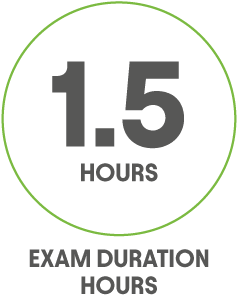
 Icon showing the number 1.5 and the word HOURS, with EXAM DURATION HOURS written below the green-bordered circle.

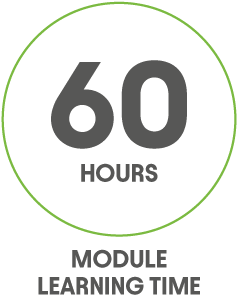
Icon showing the number 60 and the word HOURS, with MODULE LEARNING TIME written below the green-bordered circle.

Icon showing the number 6 and the word CREDITS inside a green-bordered circle.

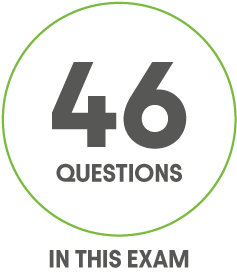
Icon showing the number 46 and the word QUESTIONS, with IN THIS EXAM written below the green-bordered circle.

DOWNLOAD FULL SYLLABUS

Learning outcomes, assessment criteria and indicative content

1.1 Compare supply chains, supply network and supply chain management

  • 1.1.1Defining supply chains, supply networks and supply chain management
  • 1.1.2The use of supplier tiering and network sourcing

1.2 Analyse the added value that effective supply chain management can deliver for the organisation

  • 1.2.1Improving quality
  • 1.2.2Reducing prices and total costs
  • 1.2.3Reducing time to market and achieving deliveries to required timescales
  • 1.2.4Creating innovation
  • 1.2.5Reducing risk and supply chain vulnerability

1.3 Analyse the relationship between organisational infrastructure and process management in supply chain management

  • 1.3.1Theoretical perspectives on added value
  • 1.3.2Aspects of organisational infrastructure: culture, organisational structure, and systems
  • 1.3.3Process management: the sourcing process in procurement and managing stages of the process
  • 1.3.4Process mapping techniques
  • 1.3.5Value chain analysis

1.4 Compare approaches to improving supply chains

  • 1.4.1The spectrum of relationships in a supply chain
  • 1.4.2The collaborative model of supply chain management: partnering and strategic relationship management
  • 1.4.3The competitive model of supply chain management
  • 1.4.4The outsourcing of work or services
  • 1.4.5Off shoring, global procurement and low-cost country sourcing
2.1 Compare approaches to total quality management for supply chain improvement

  • 2.1.1Defining quality and total quality management
  • 2.1.2Approaches to quality: quality inspection, quality assurance and total quality
  • 2.1.3Quality versus risk
  • 2.1.4The importance of relationships in quality management

2.2 Analyse the use of statistical methods to achieve supply chain improvement

  • 2.2.1Collating data for performance measurement
  • 2.2.2Developing key performance indicators (KPIs) on aspects of supply performance
  • 2.2.3Analysing data and an introduction to statistics
  • 2.2.4The use of the normal distribution
  • 2.2.5Developing statistical process control
  • 2.2.6The 6 sigma improvement methodology
  • 2.2.7Creating continuous improvement

2.3 Critically appraise processes that can be used for supply chain improvement

  • 2.3.1Just-in-time (JIT) supply processes
  • 2.3.2The application of JIT in the service sector
  • 2.3.3The development of lean thinking and lean supply
  • 2.3.4Lean thinking compared with agile
  • 2.3.5The 5S methodology

2.4 Examine how business process re-engineering (BPR) and benchmarking can be used for supply chain improvement

  • 2.4.1The development of business process re-engineering (BPR)
  • 2.4.2BPR in contrast to total quality
  • 2.4.3The development of lean thinking and lean supply
  • 2.4.4The use of benchmarking in supply chains

3.1 Evaluate sources of competitive advantage

  • 3.1.1Competitive advantage based on lowest cost of supply
  • 3.1.2Competitive advantage achieved through sources of differential advantage such as innovation, range of products, brand image and customer care

3.2 Analyse pricing arrangements that can be used to achieve competitive advantage in the supply chain

  • 3.2.1The use of fixed pricing, variable pricing, and cost plus arrangements
  • 3.2.2The use of open book costing and cost transparency
  • 3.2.3The use of incentivisation in pricing and gain share (risk/reward) mechanisms

3.3 Analyse cost reduction activities for a supply chain to achieve competitive advantage

  • 3.3.1Supplier rationalisation and aggregation of requirements
  • 3.3.2The risks and benefits associated with single sourcing arrangements
  • 3.3.3Negotiating reductions in prices and costs
  • 3.3.4Collaborative and competitive models of supply
  • 3.3.5Value analysis and value engineering

3.4 Assess methods to promote greater collaboration in supply chains to support the achievement of competitive advantage

  • 3.4.1Strategic versus operational suppliers
  • 3.4.2Creating partnership sourcing arrangements
  • 3.4.3Building trust with suppliers
  • 3.4.4The relationship life cycle

View other modules

Four core modules make up 42 of the required credits for this qualification, choose three elective modules to make up the 18 remaining credits

Select a module below for more information: